

This guide explains depreciation reports for rental properties, offering structured tax clarity for the investment property owners. Property owners should contact a qualified quantity surveyor early to secure compliant documentation and accurate deductions. Clear knowledge of depreciation rules supports stronger tax results across residential income-producing properties. Professional report preparation reduces errors and supports confident tax reporting across ownership periods.
Purpose and Legal Importance of Depreciation Reports
A depreciation report rental property outlines allowable deductions under tax legislation for compliant rental property ownership. The report assigns construction costs across eligible assets using legislated effective life schedules. Tax authority acceptance depends on professional preparation and accurate historical cost allocation.
Reports remain valid across ownership years, provided no structural alterations affect asset valuation eligibility. Legal relevance improves audit confidence and supports accountant reliance during annual tax return lodgement.
Key Elements Covered Within a Depreciation Report
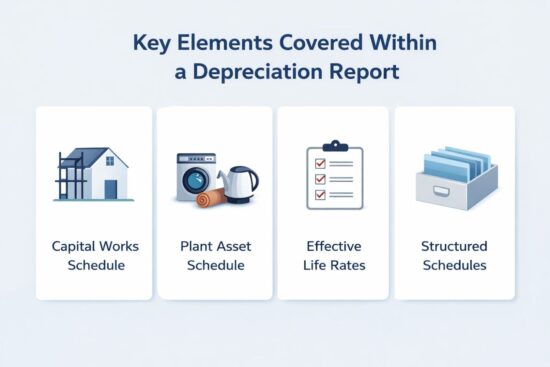
A professional depreciation report separates claimable assets into clearly defined categories for calculation accuracy. Clear categorisation ensures consistent application of depreciation rules across each reporting period. Detailed structure improves clarity for accountants and supports accurate assessment during tax return preparation.
Key report inclusions appear below:
- Capital works schedules detail structural elements such as walls, roofs, doors, and fixed internal finishes.
- Plant asset schedules list removable items, including appliances, carpets, blinds, and hot water systems.
- Effective life rates follow the legislation, supporting defensible calculations within annual tax returns.
- Structured schedules assist accountants during lodgement and simplify long-term record management requirements.
Role of Qualified Quantity Surveyors in Report Preparation
Registered quantity surveyors prepare depreciation reports under recognised construction measurement and taxation standards. Professional accreditation ensures cost estimates reflect market data and compliant assessment practices. Experience across residential construction supports precise asset allocation and effective life categories.
Independent preparation maintains objectivity and aligns documentation with the taxation requirements. Accountants rely on surveyor certification to support defensible claims during compliance reviews. Certification strengthens report credibility during official review processes.
Tax Application Benefits for Rental Property Owners
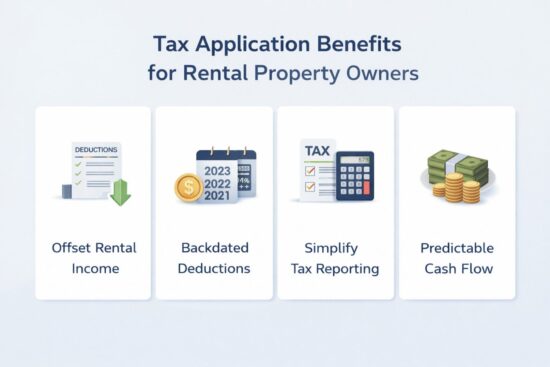
Depreciation reports improve tax outcomes through structured deduction claims across each financial year. Reports allow annual depreciation amounts to offset rental income and reduce taxable figures. Backdated deductions apply from the purchase date, subject to legislative eligibility conditions. Clear schedules support accountant workflows and reduce amendment requests from taxation authorities. Consistent application across years supports a predictable cash flow for property owners.
Appropriate Stages for Obtaining a Depreciation Report
Property owners should order depreciation reports after settlement, including for older residential investments. Renovation completion triggers updated assessments to capture new assets and revised construction costs. Refinancing events do not affect report validity when the ownership structure remains unchanged.
Reports remain usable across multiple years until the asset’s effective life expiry. Early engagement avoids missed claims and supports lawful deduction maximisation. Timely reports support accurate long-term tax planning.
A depreciation report for rental property provides measurable tax value when prepared accurately and applied consistently across ownership periods. Property investors should consult a qualified quantity surveyor to secure compliant documentation aligned with Australian taxation standards.
Accurate schedules support accountant reliance and reduce assessment disputes during annual lodgement. Strong reporting improves cash flow predictability and tax position clarity. Professional preparation supports confident investment management across residential rental portfolios.