
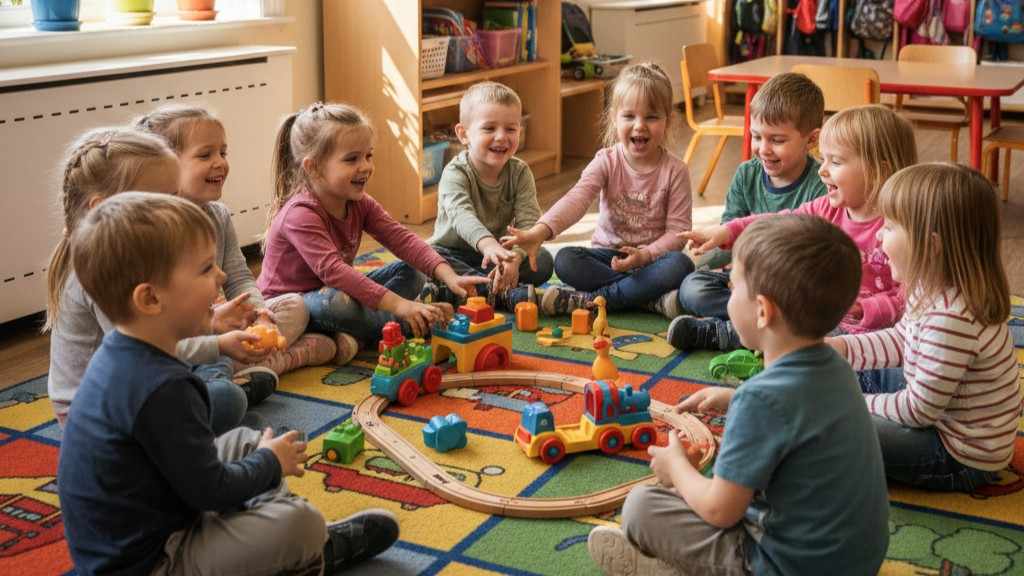
This guide outlines key signs that indicate a child is ready for group-based learning. It covers five main areas: social development, communication, emotional regulation, collaborative play, and classroom adaptability, helping parents assess their child’s readiness for a structured group setting.
The Benefits of Group-Based Learning
Before jumping into the signs of readiness, it’s worth understanding why group learning matters in the first place.
When children learn alongside peers, they pick up more than academic skills. They learn how to take turns, resolve disagreements, share resources, and build friendships. Group settings also expose kids to diverse perspectives and communication styles that simply can’t be replicated at home. Research consistently shows that early learning habits that supports better long-term outcomes in language, emotional intelligence, and social competence.
Social Milestones and Peer Interaction
One of the clearest indicators of readiness is how your child behaves around other kids. Ask yourself: does your child seek out other children to play with? Do they show interest in what peers are doing?
Children who are ready for group learning typically:
- Initiate play with familiar and unfamiliar children
- Show interest in watching others before joining in
- Understand basic social concepts like sharing and taking turns
- Recover relatively quickly after minor conflicts with peers
It’s normal for young children to engage in parallel play—playing near others without directly interacting. However, if your child begins showing interest in cooperative play (building something together, role-playing scenarios, playing simple group games), that’s a strong sign they’re ready for a more structured social environment.
Communication Skills and Emotional Readiness
Group settings require children to express themselves clearly and manage their emotions—two skills that develop hand in hand.
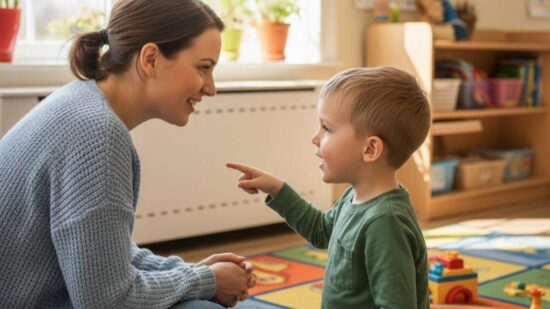
Communication Readiness
Your child doesn’t need to be a confident speaker to thrive in a group environment. But they should be able to:
- Communicate basic needs (hunger, bathroom, discomfort)
- Follow simple two- to three-step instructions
- Ask for help when needed
- Understand and respond to their name and simple questions
Children who struggle to express frustration verbally are more likely to act out physically—not because of behavioral issues, but because they lack the words. If your child is building their vocabulary and starting to use language to describe feelings (“I’m sad,” “I don’t want to”), they’re developing a crucial foundation for group learning.
Emotional Readiness
Emotional regulation is just as important. Watch for signs like:
- Self-soothing after minor upsets without needing constant adult intervention
- Tolerating brief separations from caregivers without extended distress
- Showing empathy, such as offering comfort to a crying friend
- Managing transitions between activities with reasonable ease
No child is expected to have perfect emotional control—that takes years to develop. The goal is to see progress, not perfection.
Problem-Solving and Collaborative Play
Play is how children rehearse real-world skills. The way your child plays reveals a great deal about their readiness for group-based learning.
Look for these collaborative play indicators:
- Negotiating roles during pretend play (“You be the doctor, I’ll be the patient”)
- Adapting plans when things don’t go as expected
- Sharing materials without consistent adult prompting
- Celebrating peers’ successes, not just their own
Problem-solving in a group context also means knowing when to ask for help versus when to try again independently. Children who are beginning to persist through challenges—building a block tower that keeps falling, for example—are demonstrating exactly the kind of resilience that group learning environments reward.
If your child tends to give up quickly or melt down when things don’t go their way, it doesn’t mean they aren’t ready. It may simply mean they need a little more practice in low-pressure group settings first.
Preparing Your Child for a Classroom Environment
Readiness isn’t purely about what your child can already do—it’s also about preparation. There are practical steps parents can take to ease the transition into group learning.
Build routine familiarity. Classroom environments run on predictable schedules. Introducing consistent routines at home (regular mealtimes, sleep schedules, structured play periods) helps children feel secure in structured settings.
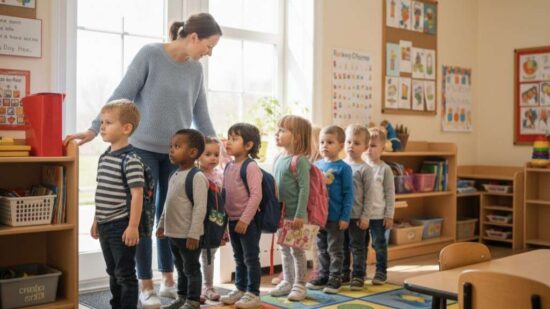
Practice group scenarios. Playdates, library story times, and community sports are low-stakes opportunities for your child to experience group dynamics before entering a formal learning environment.
Talk about what to expect. Children handle transitions better when they know what’s coming. Read books about starting school or daycare, and have open conversations about what a typical day might look like.
Encourage independence. Skills like putting on shoes, washing hands, and tidying up after play might seem minor, but they matter enormously in group settings where teachers can’t provide one-on-one attention constantly.
The Importance of Environmental Transitions
Transitions—moving from home to a new environment—are one of the biggest hurdles for young children entering group learning. Even children who display all the right social and cognitive signs can struggle when their environment changes suddenly.
This is why gradual exposure makes such a difference. Spending time in varied settings, like a local park, a playgroup, or a daycare in Taylorsville, can help children build confidence across different environments rather than attaching security exclusively to the home. The more comfortable your child becomes with new spaces and new faces, the smoother the transition into a group learning setting will be.
It’s also worth paying attention to your own comfort level. Children are perceptive—if a parent is visibly anxious about a transition, children often mirror that anxiety. A calm, confident handoff goes a long way.
Conclusion
Readiness for group learning develops over time, with some skills appearing before others. If your child shows many signs of readiness, it may be time to look into local programs. For concerns about communication or emotional regulation, consulting a specialist is a good idea, as early intervention can help.