
Lean manufacturing is more than just a buzzword in the industrial sector; it is a philosophy dedicated to minimizing waste while simultaneously maximizing productivity. By focusing on value from the customer’s perspective, lean principles aim to streamline operations and eliminate anything that doesn’t add value to the final product.
However, the backbone of any successful lean operation is the reliability of the equipment used to produce goods. Without functioning machinery, the flow of production stops, creating the very waste—downtime, defects, and waiting—that lean aims to eliminate.
To truly embrace lean manufacturing, facility managers must integrate robust maintenance strategies that align with their operational goals. Reactive maintenance, or “fighting fires” when things break, is the antithesis of lean.Instead, proactive and data-driven approaches are required to ensure continuous flow and operational stability.
Here are five maintenance practices that support lean manufacturing and help organizations achieve operational excellence.
1. Total Productive Maintenance (TPM)
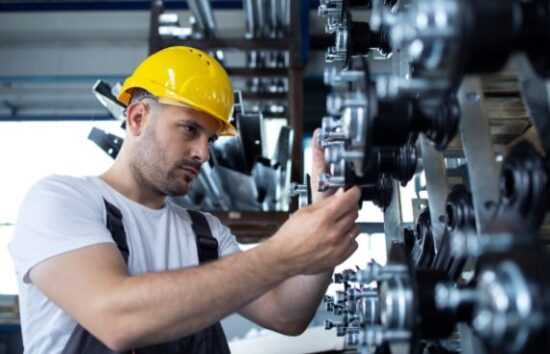
Total Productive Maintenance (TPM) is perhaps the most critical maintenance methodology aligned with lean manufacturing. At its core, TPM blurs the lines between production and maintenance by involving machine operators in the care of their equipment.
In a traditional setup, an operator might run a machine until it breaks, then call a technician. In a TPM environment, that same operator is trained to perform basic maintenance tasks such as cleaning, tightening bolts, and routine inspections.
This shift in responsibility supports lean goals by drastically reducing downtime. When operators “own” their equipment, they become attuned to its normal sounds and vibrations, allowing them to detect abnormalities before they result in catastrophic failure.
Furthermore, because minor issues are addressed immediately by the person closest to the machine, maintenance technicians are freed up to focus on more complex, high-value tasks. This holistic approach fosters a culture of shared responsibility and continuous improvement (Kaizen), which is essential for a lean environment.
2. Predictive Maintenance (PdM)
While preventive maintenance involves servicing equipment on a fixed schedule, Predictive Maintenance (PdM) takes efficiency a step further by using real-time data to determine the actual condition of in-service equipment. PdM utilizes various technologies, such as vibration analysis, infrared thermography, and oil analysis, to predict when a failure might occur.
In a lean manufacturing context, PdM is invaluable because it eliminates the waste associated with unnecessary maintenance. servicing a machine that doesn’t need it consumes labor hours and spare parts (waste), while failing to service a machine that is about to break causes downtime (also waste).
PdM finds the “sweet spot,” allowing maintenance to be performed precisely when needed. By relying on data rather than guesswork or rigid calendars, manufacturers can maximize the useful life of their components and maintain the steady production flow required for lean success.
3. Standardized Lubrication Protocols

Friction is the enemy of efficiency, and improper lubrication is a leading cause of equipment failure. In a lean facility, lubrication cannot be an afterthought; it must be a precise, standardized process. Over-lubrication can cause seals to burst and attract contaminants, while under-lubrication leads to increased wear and heat generation.
Both scenarios lead to unplanned downtime and reduced asset life.To support lean objectives, facilities should adopt automated and standardized lubrication solutions. Utilizing advanced tools helps ensure the right lubricant is applied at the right time in the right quantity.
For example, integrating systems and equipment like Lincoln lubrication equipment helps automate the delivery of grease and oil to critical bearings and chains. This not only reduces the manual labor associated with walking routes but also ensures consistency that human application cannot always match.
By removing the variability in lubrication, manufacturers protect their assets and ensure the continuous uptime necessary for lean production.
4. Root Cause Analysis (RCA)
When a breakdown does occur, a lean organization does not simply patch it up and move on. They ask “why” until they find the fundamental reason for the failure. Root Cause Analysis (RCA) is a problem-solving method used to identify the underlying cause of faults or problems.
This practice supports lean manufacturing by preventing the recurrence of issues, thereby reducing future waste. If a motor fails, replacing the motor is a temporary fix. RCA might reveal that the motor failed because it was misaligned. Aligning it fixes the immediate cause, but asking “why” again might reveal that the mounting base is warped.
Fixing the base prevents the misalignment from happening again. By systematically eliminating the root causes of equipment failure, maintenance teams contribute to a more stable and predictable production environment.
This reliability is crucial for lean concepts like Just-In-Time (JIT) manufacturing, where there is no inventory buffer to hide the impact of machine failures.
5. The 5S System in Maintenance
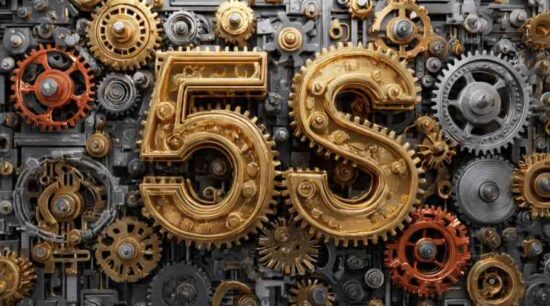
The 5S methodology—Sort, Set in order, Shine, Standardize, and Sustain—is often associated with organizing the production floor, but it is equally vital for maintenance workshops and tool cribs. A disorganized maintenance area leads to wasted motion (searching for tools), wasted time (waiting for parts), and errors (using the wrong component).
Applying 5S to maintenance operations streamlines the repair process. When technicians have organized toolboxes, clearly labeled spare parts bins, and clean workspaces, they can perform their jobs more quickly and safely.
“Shine” (cleaning) also plays a dual role in maintenance; cleaning a machine is essentially an inspection process that reveals leaks, cracks, or loose fittings.
By standardizing these organization and cleaning practices, maintenance teams reduce variability and improve their response times, directly supporting the lean goal of maintaining continuous flow.
Conclusion
Achieving a truly lean manufacturing environment is impossible without a maintenance strategy that is equally lean and proactive. By shifting from reactive repairs to strategic practices like Total Productive Maintenance, Predictive Maintenance, and standardized lubrication, manufacturers can significantly reduce waste and improve reliability.
These practices ensure that equipment is ready to perform when needed, impacts the lifespan of machine safeguarding the continuous flow of value to the customer. As organizations continue to refine their operations, the integration of these maintenance strategies will remain a cornerstone of industrial efficiency and success.