

Choosing a Utah SEO agency is no longer about finding someone who can sprinkle keywords onto a page and promise visibility. The market is too competitive, the search landscape is too nuanced, and the cost of weak execution is too high. Utah businesses need SEO partners that understand how local intent, technical performance, and trust signals work together to produce qualified demand, not just traffic.
The winning companies are usually not the ones with the loudest claims. They are the ones with the clearest strategy, the cleanest website foundations, and the most disciplined execution. For companies across the Wasatch Front and beyond, the right SEO partner should improve discoverability, but it should also improve the quality of the leads that discovery produces.
Gravitate One approaches SEO with that mindset. As a boutique agency, Gravitate One focuses on high-touch partnerships, selective intake, and tailored strategy rather than generic campaigns. That matters in a state as commercially diverse as Utah, where the search behavior of a consumer in Salt Lake City is not identical to that of a prospect in Lehi or St. George.
The Real Job of SEO Is Not Ranking, It Is Relevance
A common mistake is treating SEO as a ranking exercise. In practice, ranking is only useful when it leads to the right kind of attention. A Utah business does not need random visibility. It needs visibility for searches that reflect intent, urgency, and commercial value.
That means a serious SEO program has to connect three things:
- The language buyers actually use
- The pages search engines can confidently understand
- The conversion path that turns visits into leads or sales
When those elements align, SEO becomes a revenue channel rather than a vanity metric. That is why a good Utah SEO agency should spend as much time mapping intent and site structure as it does creating content.
Local Intent Is More Specific Than Most Businesses Assume
Someone searching for “best roofing company” and someone searching for “roof replacement estimate in Lehi” are not at the same stage. The second search is more actionable, and the page that serves it should be built accordingly. A strong SEO strategy distinguishes between broad awareness terms and high-intent keywords that point to a likely next step.
This is especially important in Utah, where local competition can be dense in one corridor and far thinner in another. A business serving the Salt Lake Valley may need a different geographic and content strategy than one targeting Silicon Slopes or southern Utah. Hyper-local geo-targeting is not a gimmick; it is a practical response to how people search.
Technical SEO Is the Difference Between Visibility and Friction

Many business owners think SEO begins with content. In reality, it often begins with technical cleanup. If a site loads slowly, confuses crawlers, or buries important pages, even strong content can underperform. Search engines reward clarity, and users do too.
A credible Utah SEO agency should be able to explain how the site is performing at a structural level. That includes crawlability, internal linking, mobile usability, page speed, and Core Web Vitals. These are not isolated metrics. They shape whether a site is easy to index, easy to navigate, and easy to trust.
Gravitate One places clear emphasis on technical precision because it affects both search performance and user experience. If a page takes too long to load, or if the architecture makes it difficult for Google to interpret priority pages, the entire campaign becomes less efficient.
What Technical SEO Should Quietly Improve
A useful technical program usually creates gains in several areas at once:
- Faster load times that reduce abandonment
- Better crawl efficiency so important pages get discovered
- Cleaner navigation that helps users move toward conversion
- Improved mobile experience for on-the-go searchers
- Stronger Core Web Vitals scores that support overall site quality
These improvements are rarely flashy, but they are often the reason SEO compounds over time. Without them, content and link building have to work much harder than they should.
Why Site Architecture Shapes Revenue Potential
Site architecture determines how authority flows through the website. It also determines how easily visitors can find the next relevant page. For a service business, that means your most important pages should not be stranded. They should be connected logically, supported by internal links, and reinforced by topical relevance.
Gravitate One treats architecture as a strategic asset, not an afterthought. That approach makes sense because a well-organized site helps search engines understand what matters and helps prospects understand what to do next.
Content Needs to Prove Expertise, Not Just Contain Keywords
Content still matters, but the standard has changed. Search engines are much better at identifying thin, repetitive, or generic writing. So are readers. If a page sounds interchangeable with every other page on the internet, it will not earn trust for long.
Modern SEO content should demonstrate E-E-A-T: Experience, Expertise, Authoritativeness, and Trustworthiness. In practical terms, that means content should answer real questions, reflect actual business knowledge, and avoid empty phrasing. It should help the reader make a decision, not just satisfy a checklist.
This is where a quality-minded firm like Gravitate One stands apart. The goal is not to publish more content for its own sake. The goal is to create pages that align with search intent, support the sales process, and signal credibility in a way both users and search engines can recognize.
Content That Performs Usually Does Three Jobs at Once
Good SEO content should:
- Capture a meaningful search query
- Build confidence in the business
- Move the reader toward contact, booking, or purchase
If a page only does one of those jobs, it is underperforming. A blog post may educate but fail to convert. A service page may convert but fail to rank. A strong strategy aims to do both.
For example, a business targeting competitive local terms might need a service page that explains the offer, a supporting article that answers common buyer questions, and location-specific content that reinforces geographic relevance. Those pieces work together rather than competing with one another.
Local Search Signals Decide Who Shows Up First
For Utah companies, local visibility often depends on more than website content. Google Business Profile optimization, review signals, local citations, and map relevance all influence whether a business appears in the Google Map Pack and nearby search results.
This is where many campaigns become too shallow. They target local keywords on the website but ignore the ecosystem around the business. Search engines evaluate trust across multiple signals, and local search is especially sensitive to consistency and proximity.
A well-run Utah SEO agency should understand that local optimization is not a separate task from organic SEO. It is part of the same system. Your website, your business profile, your citations, and your content all need to reinforce one another.
When Local SEO Is the Better Growth Lever
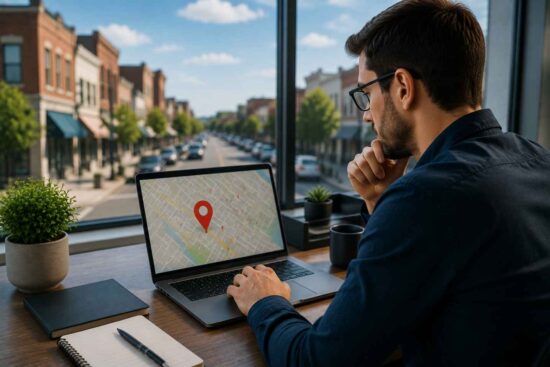
Local SEO tends to matter most when the business depends on:
- Service-area searches
- High-trust buying decisions
- Phone calls or form fills from nearby prospects
- A physical location or regional footprint
- Competitive categories where Map Pack visibility drives clicks
In those situations, a business does not just need rankings. It needs presence where local buyers are already making decisions.
Trust Signals Are Not Optional
Reviews, category alignment, service descriptions, and location data all affect perceived legitimacy. When these elements are inconsistent, search visibility can suffer even if the website itself is strong. A disciplined agency manages these details because they compound over time.
Gravitate One’s approach to Google Business Profile management and local authority building reflects that reality. It is not about gaming the system. It is about making the business easier to trust in a search environment that rewards trust.
The Best Agencies Operate Like Partners, Not Vendors
The difference between a transactional vendor and a true SEO partner becomes obvious once the campaign is underway. A vendor sells activity. A partner manages outcomes, context, and priorities.
That is part of Gravitate One’s positioning. The firm intentionally limits client intake so each account receives high-touch attention. Every client works with a dedicated account manager, which helps preserve continuity and reduces the risk of generic, one-size-fits-all execution. In SEO, that operational model matters because the work is iterative. Strategy should evolve as the market, the data, and the business goals evolve.
A serious engagement should include ongoing monitoring, interpretation, and refinement. Efficient execution also depends on strong internal workflows, and businesses can learn from strategies to optimize business processes when assessing how effectively an SEO partner organizes its work and manages ongoing improvements.
If a page gains impressions but not clicks, the answer may be different than if a page gets traffic but no conversions. If local visibility improves but lead quality drops, the campaign needs adjustment. Real SEO management requires judgment, not just reporting.
Gravitate One also reflects this modern approach through the use of established tools such as Google Search Console, SEMrush, Moz, Ahrefs, and Screaming Frog. Tools do not create strategy, but they help make decisions more precise and less speculative.
What to Expect From a Better SEO Decision
If you are evaluating a Utah SEO agency, the right question is not “Who can promise the fastest result?” It is “Who can build the most durable growth system?”
The strongest providers usually show the same traits:
Businesses evaluating broader digital marketing performance can also use a checklist for evaluating PPC management performance to assess whether paid campaigns are being managed with the same level of accountability and strategic focus.
- They explain strategy in plain language
- They understand local and regional search behavior
- They talk about technical health, not just content volume
- They connect SEO to business goals like calls, leads, and sales
- They can point to real results without overpromising future ones
- They manage work consistently instead of treating SEO as a one-time setup
This is where the best agencies create leverage. They reduce wasted effort, focus resources on high-value opportunities, and build organic visibility that becomes more efficient over time.
For businesses that want a more thoughtful approach, Gravitate One’s SEO services are built around that kind of long-term discipline. The emphasis is on relevance, technical quality, and credible execution rather than shortcuts or empty promises.
Frequently Asked Questions
1. What does a Utah SEO agency actually do?
A Utah SEO agency helps businesses improve visibility in organic search and local results. That usually includes technical SEO, content strategy, Google Business Profile management, local citations, and link acquisition. The goal is not just more traffic, but better-qualified traffic.
2. Why is local SEO so important in Utah?
Utah has distinct regional search patterns across places like Salt Lake City, Lehi, and St. George. Local SEO helps businesses appear for searches with geographic intent, especially in the Google Map Pack and nearby organic results. That can be critical for service businesses and location-based companies.
3. How is Gravitate One different from a larger SEO vendor?
Gravitate One uses a boutique model with selective client intake and dedicated account management. That means more individualized attention, more strategic oversight, and less cookie-cutter execution. The agency also blends technical SEO, content, and local optimization rather than treating them as separate silos.
4. How long does SEO take to produce results?
It depends on the starting point, competition, and scope of work. Technical fixes, content improvements, and local optimization can create early movement, but meaningful SEO growth is usually cumulative. The best expectation is steady progress supported by ongoing refinement, not instant outcomes.
5. Does SEO still matter if a business already gets referrals or paid traffic?
Yes. SEO can reduce reliance on paid channels, improve brand discovery, and capture buyers who are actively researching solutions. It also adds resilience to the marketing mix. For many businesses, organic search becomes one of the most efficient long-term lead sources when managed well.
A Better SEO Partner Builds Advantage, Not Just Rankings
The best reason to hire a Utah SEO agency is not to chase search engines. It is to build a more durable acquisition system for the business. That requires technical rigor, locally informed strategy, and content that earns trust instead of requesting it.
Gravitate One’s model fits that standard because it is built around thoughtful execution, dedicated support, and long-term value. In a market where many providers still sell volume and speed, that kind of discipline is what separates temporary movement from meaningful growth.